Working at UMPRUM
Survey results 2025–2026
Between December 2025 and January 2026, UMPRUM conducted a survey focusing on working conditions, staff assessment and workplace culture. The findings highlight particular strengths in international mobility, equal opportunities and ethics, while also identifying areas requiring further development, notably regular constructive feedback, administrative burden and internal communication. The findings vary across staff groups.
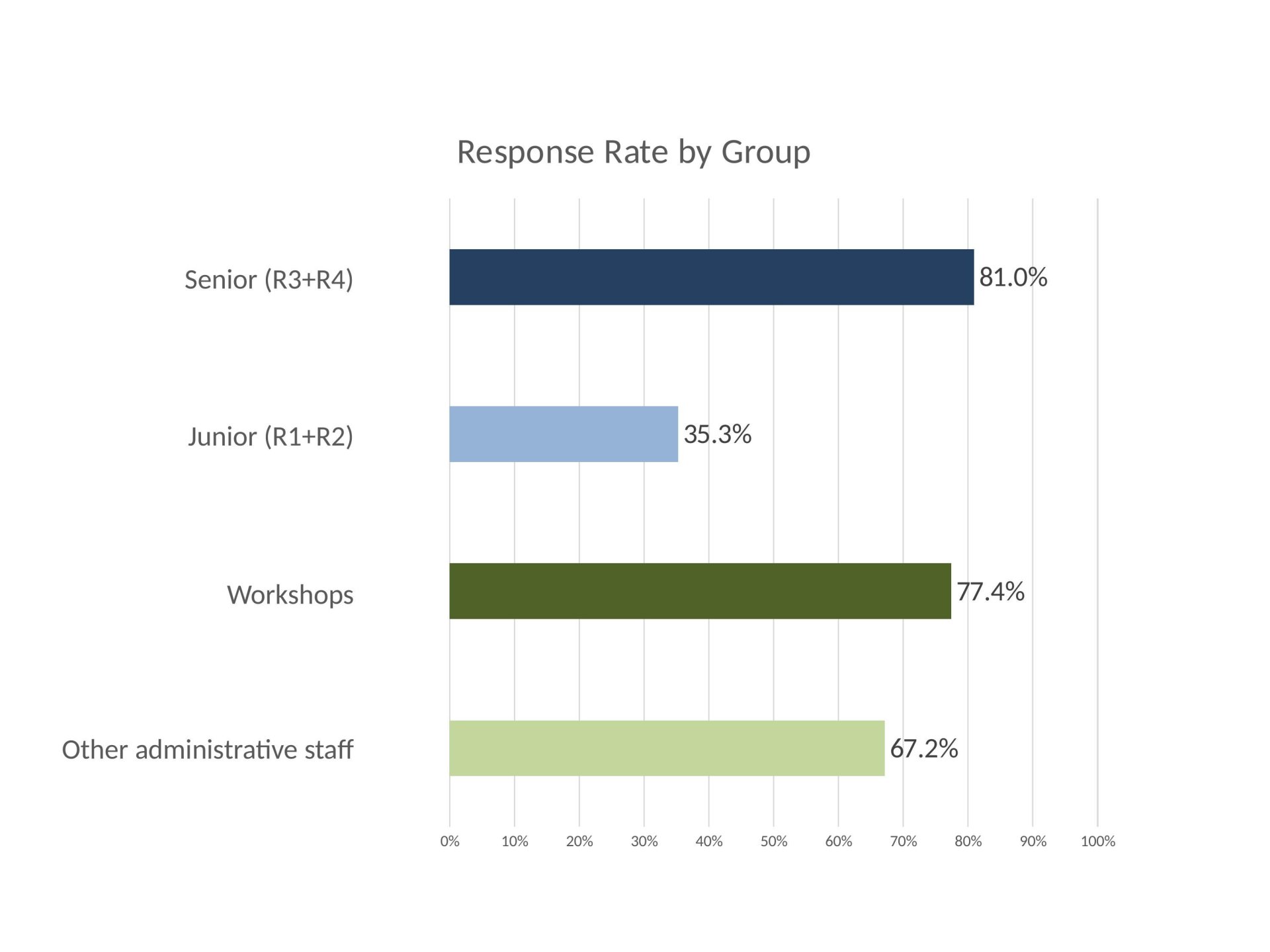
A total of 139 employees participated in the survey, representing a response rate of 57.4%.
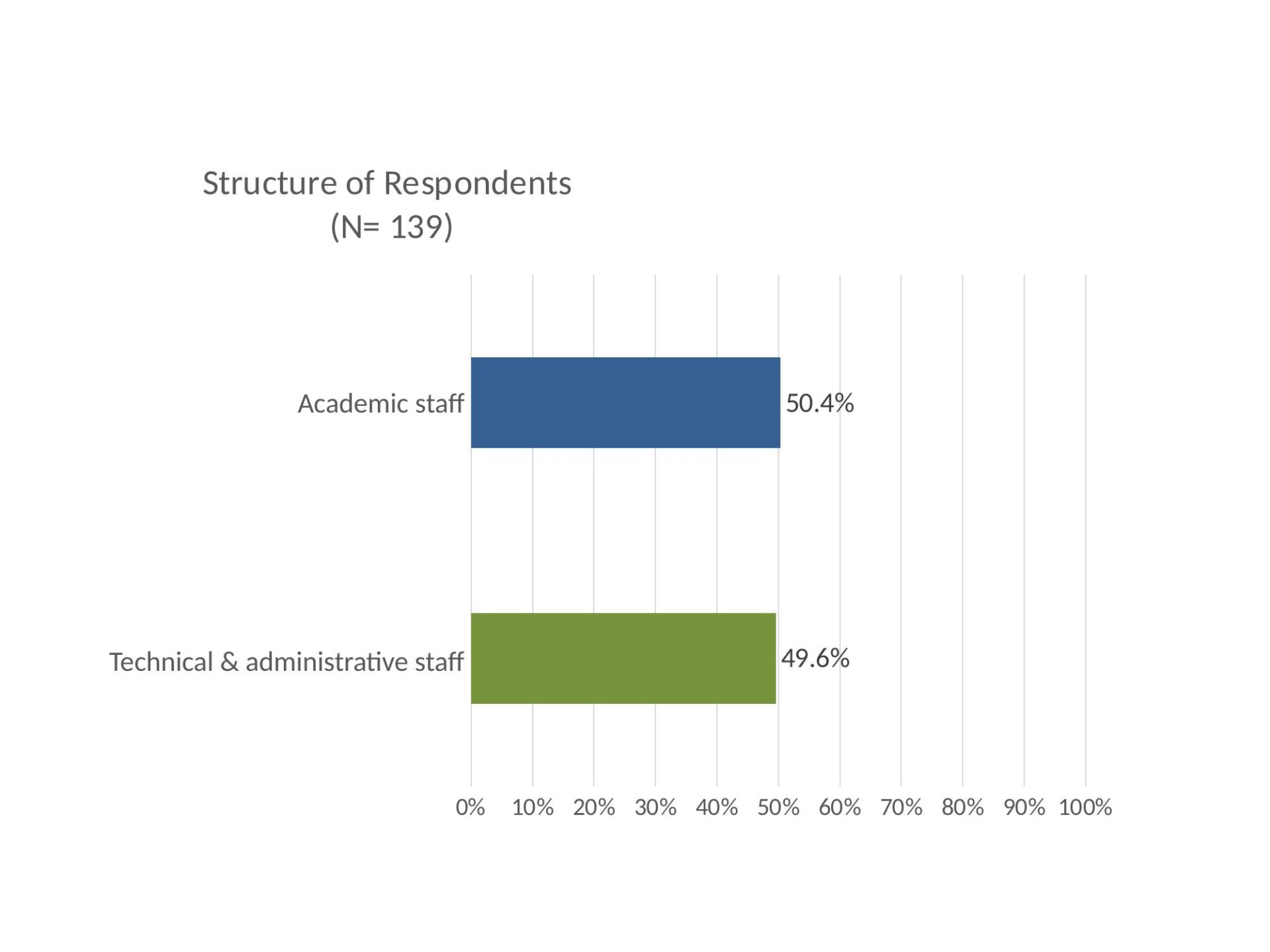
Academic staff accounted for 50.4% of respondents and non-academic staff for 49.6%, providing a broadly balanced view across UMPRUM.
Note on the data:
The categorisation of researchers (R1 - R4) follows the European Commission's researcher career framework:
R1 – First Stage Researchers (doctoral candidates)
R2 – Recognised Researchers (assistants)
R3 – Established Researchers (studio heads, associate professors)
R4 – Leading Researchers (professors)
Participation among First Stage Researchers (R1) was low. For analytical purposes this group is therefore combined with R2 and will be prioritised in the next phase of the project.
Groups R3 and R4 are analysed together.
Administrative and technical staff are analysed as two groups: workshop staff and other administrative staff.
The survey combined closed questions, ratings on a four-point Likert scale and open-ended questions, providing both quantitative findings and specific suggestions from staff.
Key findings
The results point to strong institutional foundations while also identifying areas requiring systemic improvement.

Ratings above 3.4 out of 4
International mobility (3.7): Support for international mobility is the highest -rated area. The main barrier is not funding, but a lack of time.
Equal opportunities (3.6) and ethics (3.4): UMPRUM is perceived as a fair and ethical working environment irrespective of age, gender or origin. Staff know whom to contact in the event of ethical concerns, and view the role of UMPRUM's ombudsperson positively.
Workshops as a stable environment: Workshop staff report the most stable working environment at UMPRUM in terms of both workplace relations and day-to-day operations.
Ratings below 3.0 out of 4
Career progression among administrative staff (2.5): Career pathways for administrative staff are perceived as insufficiently transparent, with very limited opportunities for progression within relatively flat organisational structure.
Feedback (2.7): Staff across UMPRUM report a lack of regular, constructive feedback from line managers. At the same time, there are concerns about overly formalised, "box-ticking" approach to staff assessment.
Workplace resources and facilities for senior academics (2.8): Senior academics report inadequate workplace resources and facilities, particularly a lack of shared offices for focused work and consultations.
Workload and organisation of work: Tensions associated with administrative workload persists between academics and administrative staff. Administrative staff report sustained workload pressures, inadequate cover arrangements and a perception that their contribution is undervalued. Academic staff identify bureaucracy and insufficient cooperation as barriers to effective work.
Psychosocial pressures arising from student interactions: Staff emphasise the need for clear boundaries and respectful communication. They also highlight the importance of safeguarding not only students, but teaching and workshop staff as well.
Internal communication: Staff report insufficient transparency in decision-making and information gaps between management and employees. Mass email communication is perceived as difficult to navigate.
How the findings vary across staff groups
A closer analysis shows significant differences in how individual staff groups experience the working environment:
Early-Career Researchers (R1+R2)
(doctoral candidates and assistants)
-
limited support during onboarding
-
doctoral candidates systematic opportunities to engage in teaching and research
-
feedback is provided mainly through formal mechanism such as questionnaires, with limited ongoing guidance
-
limited teaching-cover arrangements restrict access to sabbatical leave
-
linking assistant positions to studio heads results in lower job stability.
Senior Researchers (R3+R4)
(associate professors, professors, studios heads and heads of departments)
-
report inadequate workplace resources and facilities, including a lack of shared offices and space for teamwork and consultations
-
report a substantial administrative burden, particularly in relations with grants, and do not perceive existing administrative processes as providing effective support.
-
reject overly formalised "box-ticking" assessment approaches that do not reflect that do not reflect the nature of artistic and academic work.
Administrative and Technical Support Staff
(administration, management and workshops)
Administration
-
reports sustained workload pressures, unclear competences and inadequate cover arrangements
-
reports limited opportunities for career progression
-
identifies shortcomings in internal communication and access to information
Workshops
-
report the most stable environment in terms of workplace relations
-
highlight the need for adherence to rules, clear boundaries and respectful communication, particularly in interactions with students and academic staff.
Together with other evidence, the survey findings will inform the Working Group's development of specific actions within the HR Excellence in Research process.